
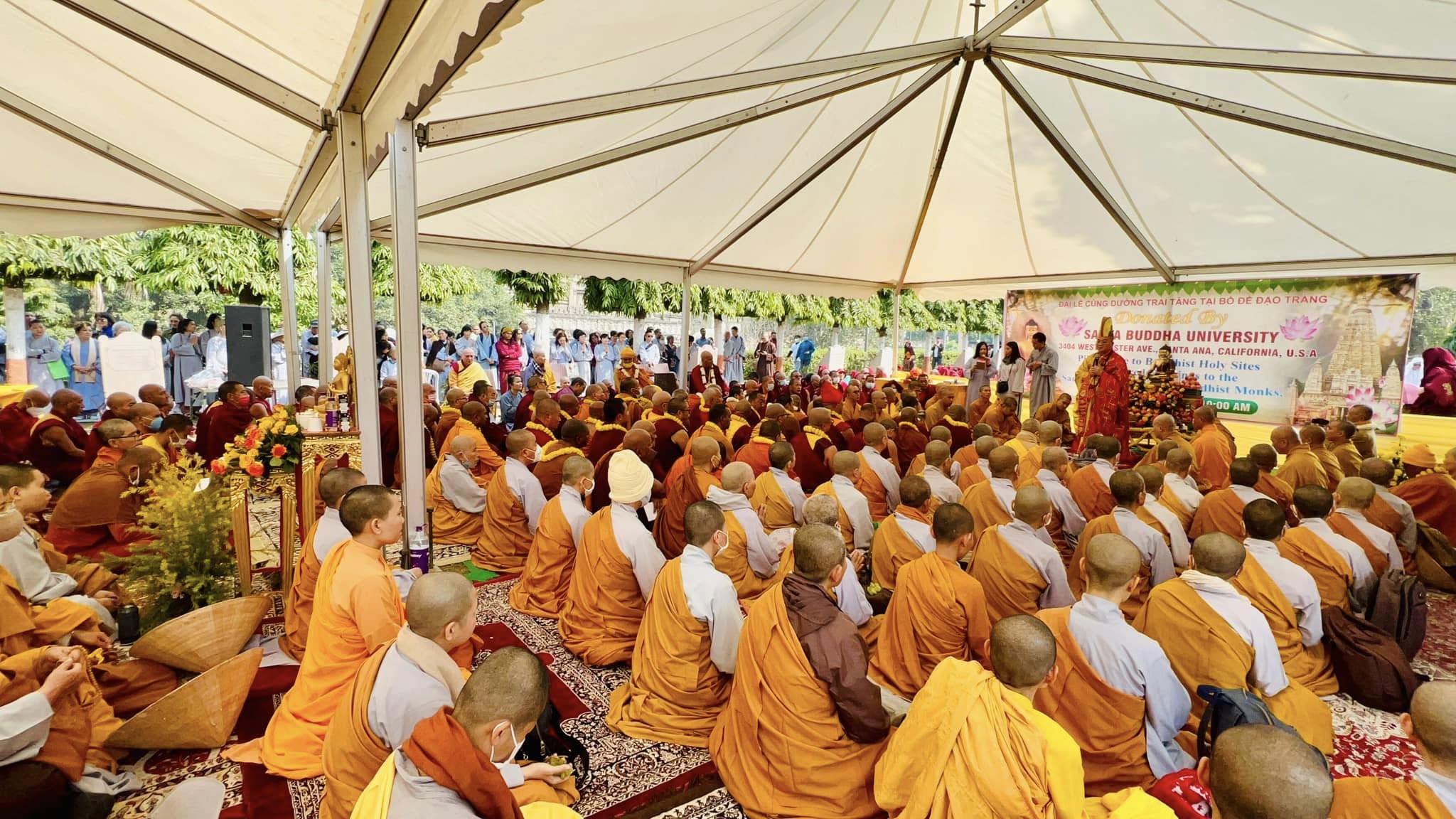
SBU STATEMENT AND THE SIGNIFICANCE OF THE TRIPITAKA RECITATION
Sakya Buddha University
On the occasion of the 2650th Vesak Commemoration, Sakya Buddha University (SBU) respectfully invites Buddhist representatives from many countries to gather at Sakya Buddha University to reflect on the role of Buddhism in the modern world.
Today, the world is facing profound challenges, including:
- Conflict and war
- Social inequality
- Environmental crises
- Spiritual and mental suffering
The teachings of the Buddha offer:
- A path of wisdom
- A path of compassion
- A path to the cessation of suffering
We affirm our commitment to:
- Promoting peace and dialogue among nations
- Protecting the environment and all forms of life on Earth
- Advancing education grounded in wisdom and compassion
- Serving society and alleviating human suffering
Buddhist universities bear a vital responsibility to:
- Educate future generations of scholars and practitioners
- Advance Buddhist studies and research
- Apply Buddhist wisdom to contemporary life
We hereby declare:
The Dharma of the Buddha remains an inexhaustible source of wisdom for humanity.
Through global cooperation, the Buddhist community will continue to contribute to building a world characterized by:
peace, wisdom, and compassion.
THE SIGNIFICANCE OF THE TRIPITAKA RECITATION
The recitation of the Tripitaka is an ancient Buddhist tradition intended to:
- Preserve the teachings of the Buddha
- Maintain the accuracy and authenticity of the scriptures
- Cultivate wisdom and mindfulness
Participants in the Recitation Ceremony
The ceremony includes:
- Monastic Sangha (Bhikkhus and Bhikkhunīs)
- Buddhist scholars
- Lay practitioners and supporters
- Ritual coordination and organizing committee
Daily Structure of the Recitation
1. Opening Ceremony
- Chanting in praise of the Buddha
- Homage to the Triple Gem
- Statement of aspiration and dedication
2. Recitation of the Scriptures
The recitation includes:
Sutta / Sutra (Discourses)
- Sutta Pitaka (Pāli Canon)
- Mahāyāna Sutras
Vinaya (Monastic Discipline)
- Vinaya Pitaka
Abhidharma (Philosophical Teachings)
- Abhidhamma
- Buddhist scholastic treatises
3. Meditation Practice
Following each recitation session:
- Seated meditation (Samatha/Vipassanā)
- Walking meditation
4. Dedication of Merit
The merit generated through recitation is dedicated to:
- World peace
- The well-being and liberation of all sentient beings
Principles of Recitation
The recitation must be conducted in accordance with the following principles:
- Accuracy
- Reverence and solemnity
- Harmony and unity
- Fidelity to authentic traditions